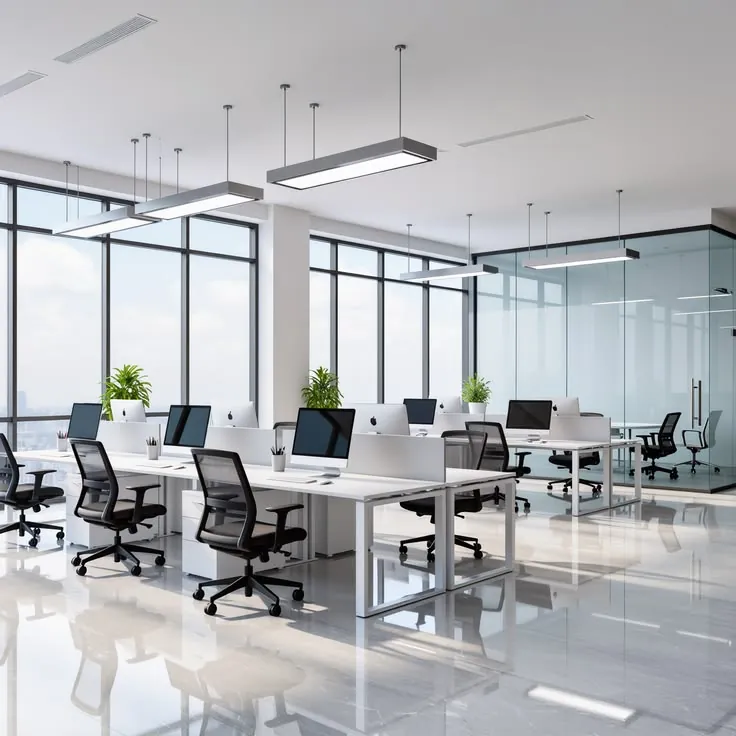
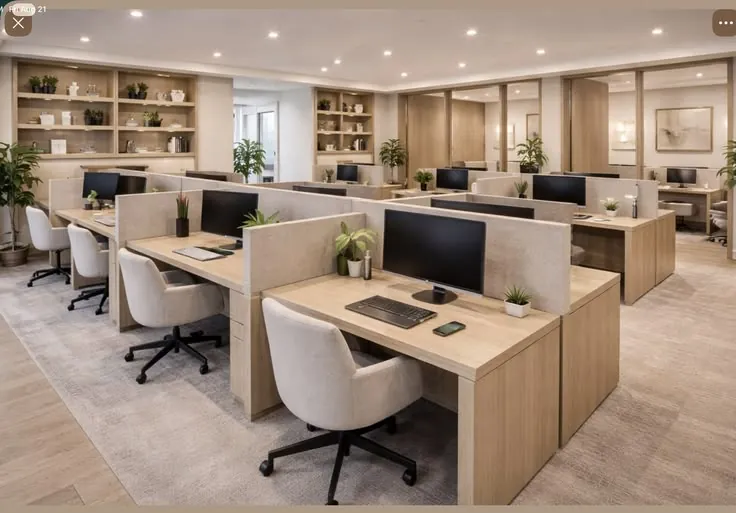
An office is more than a place with desks. A well-designed workspace supports focus and collaboration, reflects the company's identity and makes a lasting impression on clients and new hires. Here are ideas to create a modern office that works.
Start with how your team works
Before choosing finishes, understand your team's work patterns. How many people work at desks full-time? How often do they meet? Do they need quiet focus areas, client-facing spaces or flexible seating for hybrid schedules? The answers shape the layout.
Balance open and enclosed spaces
Open-plan workstations encourage communication, but everyone also needs places to concentrate and hold private conversations. A balanced office includes:
- Open workstations for everyday tasks
- Cabins for managers or confidential work
- Meeting rooms of different sizes
- Small phone booths or focus rooms
- A pantry or break area to recharge
Choose ergonomic workstations
Comfortable chairs, correct desk heights, cable management and personal storage make a big difference to daily productivity. Modular workstations with integrated power and data points keep the office neat and adaptable as the team grows.
Design a welcoming reception
The reception is the first thing visitors see. A well-designed reception desk, comfortable seating, brand signage and good lighting create a professional first impression.
Prioritise natural and artificial light
Natural light improves wellbeing, so arrange workstations to benefit from windows and use glass partitions to let light travel. Supplement with even, glare-free ceiling lighting and task lights where needed. Neutral white light helps concentration in work areas, while warmer tones suit lounges and pantries.
Control acoustics
Noise is one of the biggest complaints in open offices. Acoustic ceiling panels, carpet tiles in key areas, upholstered furniture and partitions help absorb sound and keep the space comfortable.
Express your brand
Use brand colours, materials and graphics thoughtfully — on a feature wall, in meeting rooms or through signage — rather than everywhere. A consistent design language helps the office feel connected to your identity.
Plan storage and services
Files, equipment and personal belongings need dedicated storage. Plan server or IT areas, electrical loads, data cabling and air conditioning early in the design process so they integrate neatly.
Design for flexibility
Businesses grow and change. Modular furniture, movable partitions and multi-purpose rooms let your office adapt without major rework.
Create spaces to recharge
A pantry or break area is more than a place for tea. Comfortable seating, a small counter, good lighting and perhaps a few plants give people a reason to step away from their desks and talk informally. These moments build team culture and often spark ideas that would not come up in a meeting room. Even a compact office can include a small, well-designed corner for breaks.
Think about maintenance from day one
Office furniture and finishes face daily wear. Choose surfaces that are easy to clean, edge-banding that resists chipping, and hardware rated for frequent use. Planning access to wiring, data points and air-conditioning units also makes future maintenance easier and less disruptive.
Key takeaways
- Design around how your team actually works
- Balance open workstations with private and meeting spaces
- Prioritise ergonomics, natural light and acoustics
- Express your brand thoughtfully and design for flexibility
Frequently asked questions
How much space does each employee need?
It depends on the type of work, the furniture and how many shared spaces you include. A designer will plan workstation sizes and circulation around your team size and future growth.
Are open-plan offices still a good idea?
Open plans encourage collaboration, but they work best when balanced with quiet areas, meeting rooms and acoustic treatment. A mix of spaces suits most teams better than a completely open layout.
Can an office be designed while we keep working?
Yes. Work can often be phased or scheduled outside business hours to reduce disruption. This should be discussed and planned before execution begins.
Plan your workspace
A thoughtfully designed office supports better work every day. Explore our office interior services and commercial interiors, or contact us to discuss your workspace.